【Tips for Daylight Sync】Take beautiful photos outdoors in daylight using a flash!
シェアする
On a nice, sunny day, it seems easy to take photos because it's so bright! And yet, for some reason, it doesn't go well. You end up with a failed photo... Have you ever had such a sad experience?
Actually, on sunny days, strong sunlight pours down, making shadows stand out, which is why there's a trick to taking good photos. In this article, we will introduce a method to solve common failures in outdoor daytime photography by using a flash [daylight synchronization]!
Common failures in outdoor daytime photography
When taking commemorative photos outdoors or trying portrait photography, one common failure is that 'the subject's face becomes dark due to backlighting'. For example, here is such a photo.
Auto Exposure (no exposure compensation)The face is captured, but isn't it dark...? That's the feeling. When you shoot with auto exposure in backlit or semi-backlit situations, you tend to get photos like this.
Why does backlighting make it dark?
There are two main reasons why this kind of photo is taken. The first is "Because the background is bright, the camera adjusts the brightness of the photo to the background."The camera basically looks at the entire frame you are currently shooting to determine the brightness of the photo. When it sets the brightness to what the camera considers "just right," the bright background in the sun is captured well, but the parts that are in the shade away from the sun appear dark. The second reason is "Because a camera cannot capture bright and dark parts at the same time."While human eyes can see bright and dark parts simultaneously to some extent, a camera cannot capture them as well as the human eye. Therefore, the bright parts beyond the camera's capture range become blown out (pure white), and the dark parts are crushed to black.
Since there is a stark difference in brightness between areas under the sun and areas in the shade outdoors during the day, shadows appear dark.
How can this be solved?
So, what should you do if you end up with a photo where 'the face is dark due to backlighting'? You could move to front lighting (where sunlight hits from the front), but sometimes your subject might squint, making for an awkward expression, or you might be forced into a backlit situation because you want a specific background.
First, one solution is to use "exposure compensation". This is a method of changing the exposure settings of the camera to take a brighter photo.
Let's look at a photo with exposure compensation. Exposure Compensation +1Exposure Compensation +2Keeping the camera's exposure mode on auto, I applied positive exposure compensation. When you apply positive compensation, the photo becomes brighter, but since the entire photo brightens, the light areas gradually get blown out. With exposure compensation +1, the face became a little brighter, but I get the impression it could be brighter still. At exposure compensation +2, the face is captured brightly, but the parts of the background hit by the sun are becoming blown out. Since the face is also hit by sunlight on the forehead and cheeks, those parts have become completely blown out to pure white...
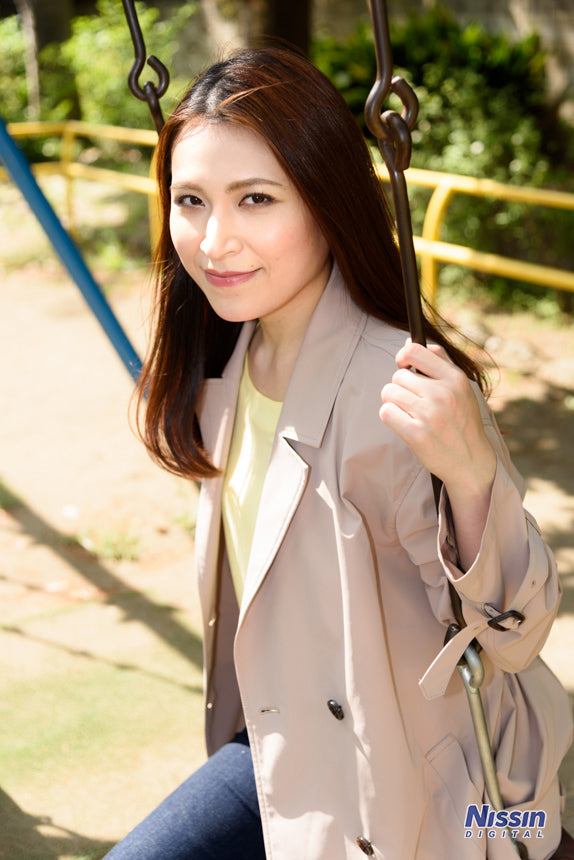
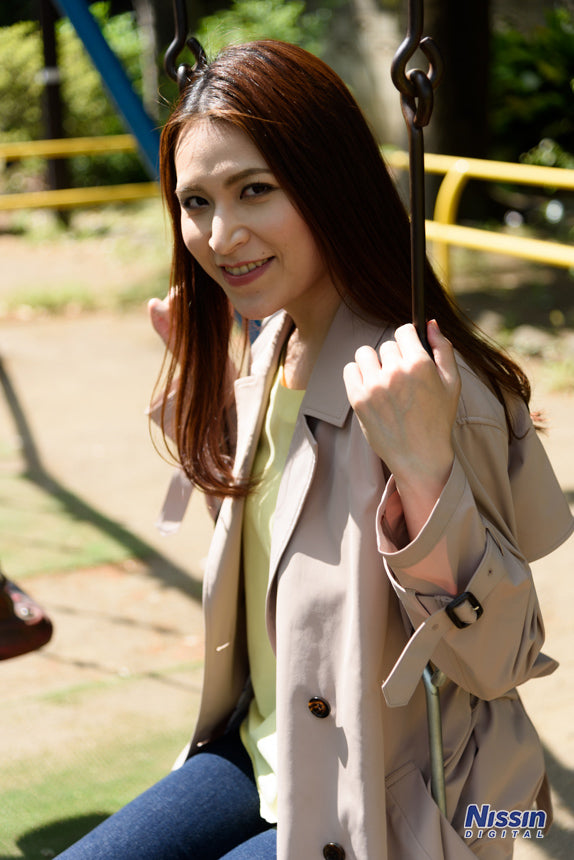
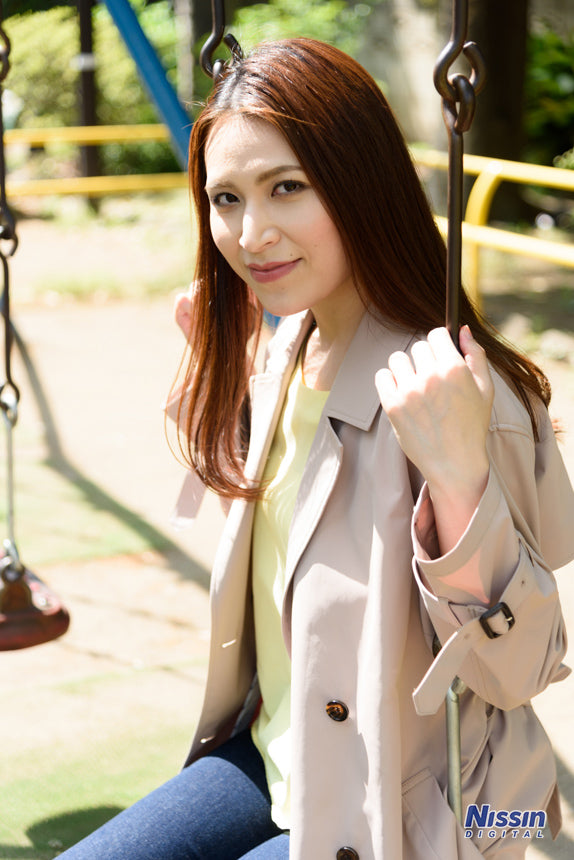
This is too bright overall, and I want to capture more of the scenery... When that happens, i400I will attach the clip-on flash "i400" to the camera's hot shoe and fire it using TTL auto direct flash. Here are the shooting results. Flash fired (TTL auto)The light from the flash hit the shadowed parts, and the face became brighter!
Using a flash outdoors during the day is called '
Benefit ① of Daylight Synchronization
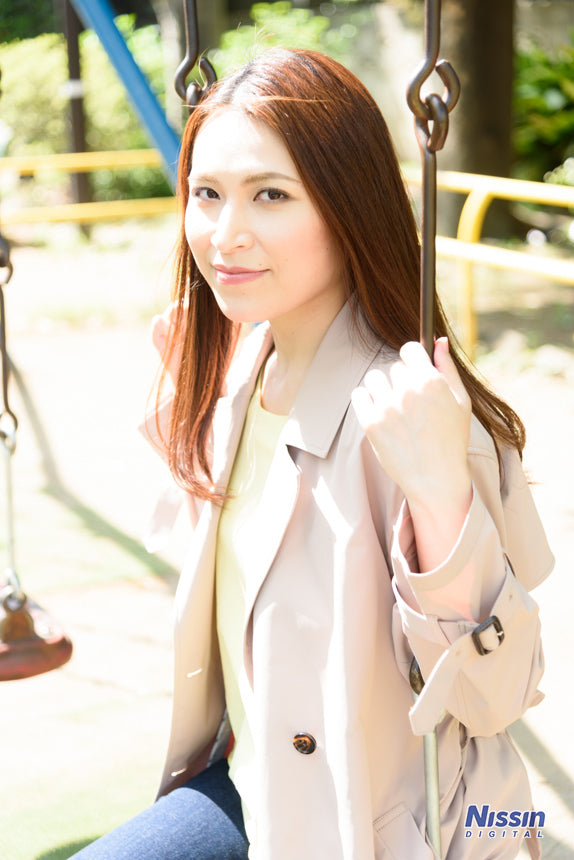
By using flash light to brighten a face that would otherwise be dark when exposing for the background, both the "background" and the "subject" become perfectly bright. (TTL mode for the flash is fine.)
Also, by using a flash, you can add a 'catchlight' to the eyes, which makes the pupils look lively and bright.
Difference with catchlightYou can see that the eye area has brightened up.
Just the presence or absence of a catchlight changes how expressions look, so using a flash is especially recommended for portrait photography!
Benefit ② of Daylight Synchronization
The catchlight from the flash light brightens the eye area, creating a lively impression!
Flash used this time
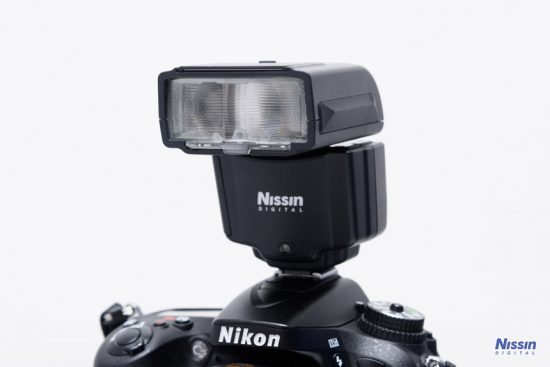
i400The flash used for this shoot was the "i400". It is an on-camera dedicated model, characterized by simple, easy-to-understand operation and being very small and lightweight. The size is perfect for attaching to small cameras like mirrorless cameras, and its compactness is its greatest charm! Its simple operation, which just requires turning a dial, is well-received by those who are not comfortable with machinery, with users saying, "I can see how to use it immediately!" It supports 5 mounts—Canon/Nikon/Sony/Fujifilm/Olympus & Panasonic (FT)—so TTL auto can be used on many cameras, making light adjustment easy. Because it is a model dedicated to on-camera use (used attached to the camera), the price is also very reasonable. It is a recommended model for those who "don't plan to do off-camera flash (using it separated from the camera)" or those who "want to try using a flash but am on a budget".
Although small, it has plenty of output, making it a very reliable flash that can be used in various situations.
A video on daylight synchronization has also been uploaded!
Flash workshops are also held regularly!
Nissin Japan holds flash workshops and events with various content all over the country. "I want to actually try it before buying a flash""I bought one but can't master it, I don't know how to use it""I want to learn more about flashes and lighting" If you feel this way, please come to our flash workshop. Our professional photographer instructors will kindly teach you anything you don't understand. We have workshops for on-camera shooting and daylight synchronization like in this article, as well as beginner workshops for those who have never used a flash, so if you want to know the tricks in detail, attending a workshop is recommended! Click here for the workshop/event information page!Model: Mari Inaba Photography/Writing: Ai Ehara (2019/04/25)


Click here for the i400 product information page! The "i40", which is the same size as the "i400" but features an LED video light and an optical slave function for off-camera use, is also recommended.
Click here for the i40 product information page!Please try daylight synchronization photography with a Nissin flash!