

"Sharpen your skills by answering the questions" Nissin Digital Lighting Quiz No. 4
"Hone your skills by answering our questions" Nissin Digital Lighting Quiz #4 <Twitter Exclusive>A monthly lighting quiz (6 questions in total).Just by thinking about the answer, you might just improve your lighting skills!?<Question>The photos were taken using accessories (modifiers) A through E.
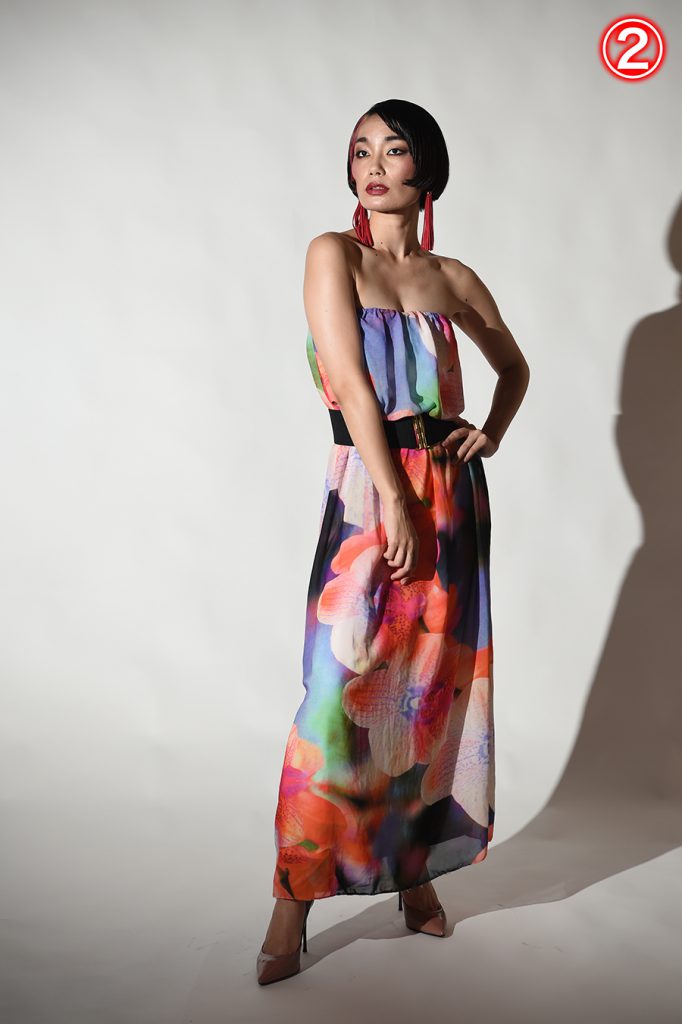
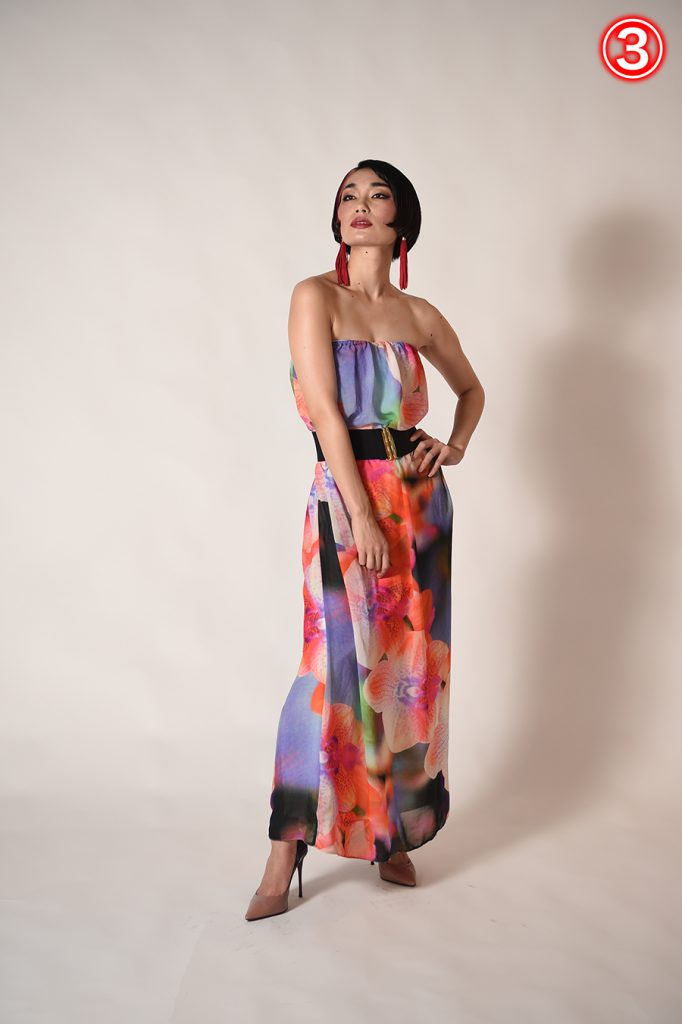
Please choose from ①, ③, and ⑤.
*The flash was not fired in the setup photos.
[Answer Format] C-○, D-○, E-○ (Enter the number in the ○)Since this is a difficult question, here is a hint from the start.
Hint: Carefully observe how the size and structure of the accessory affect the appearance of the skin and clothing, as well as the way shadows are cast.
[The answer] is at the bottom of this page.【Settings】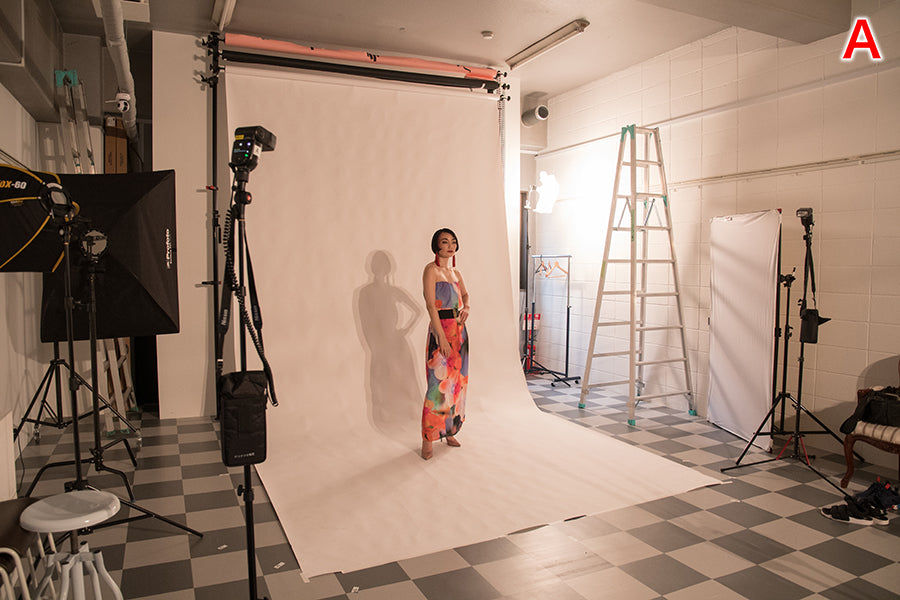
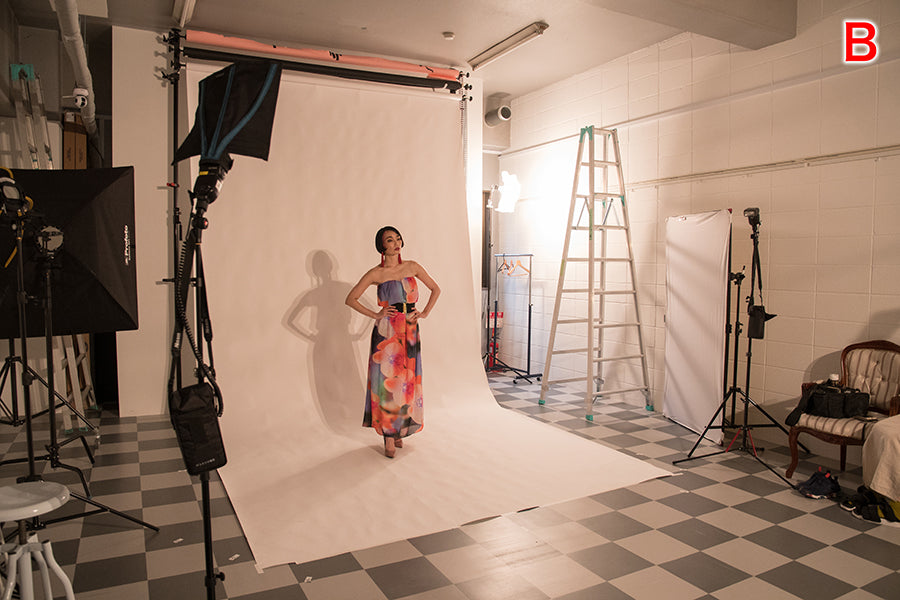
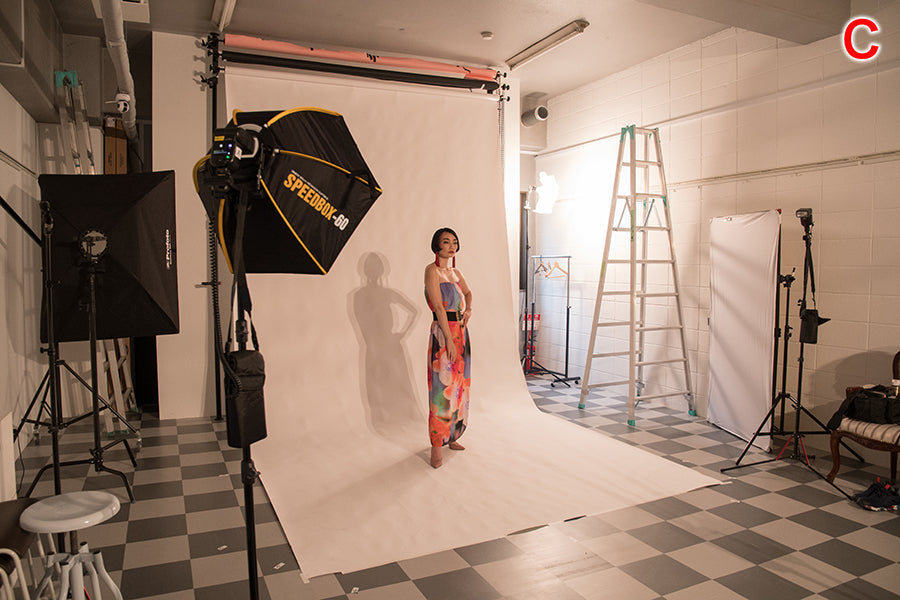
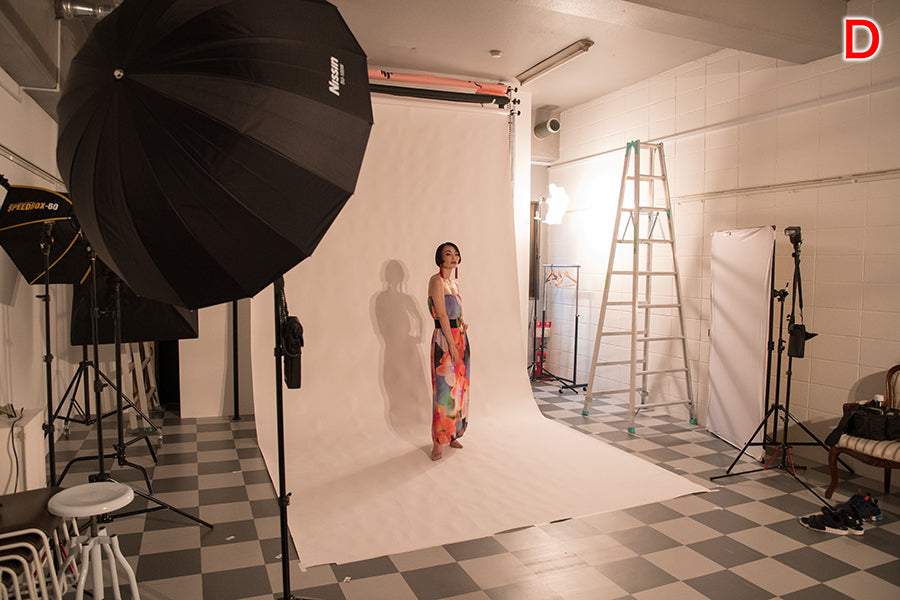
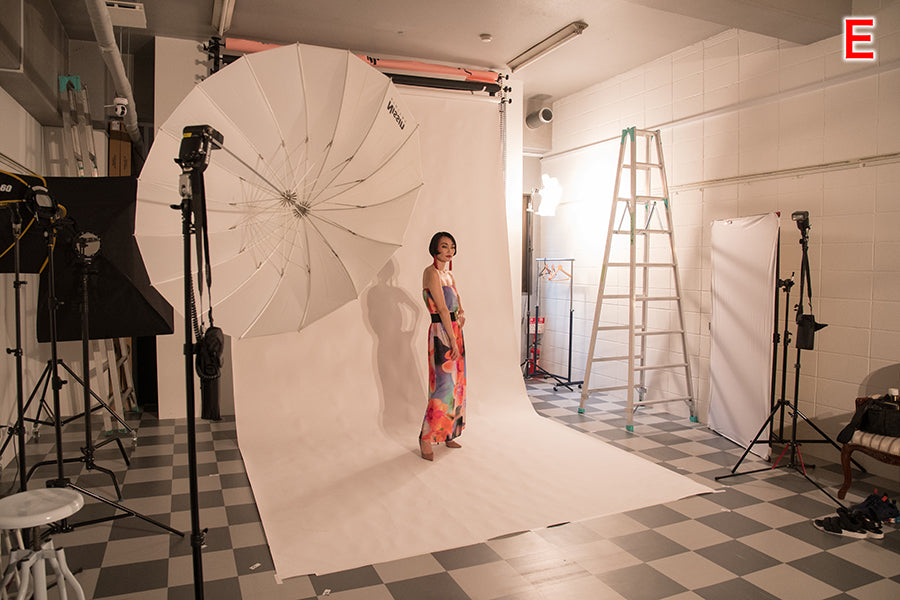 【Photos】Click the image to enlarge.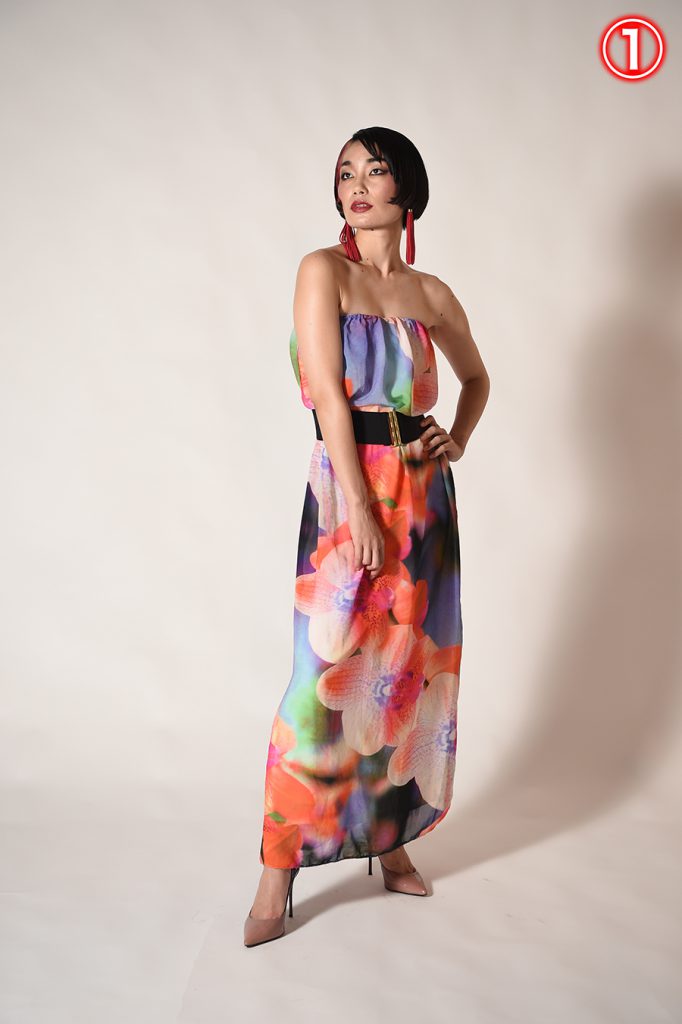
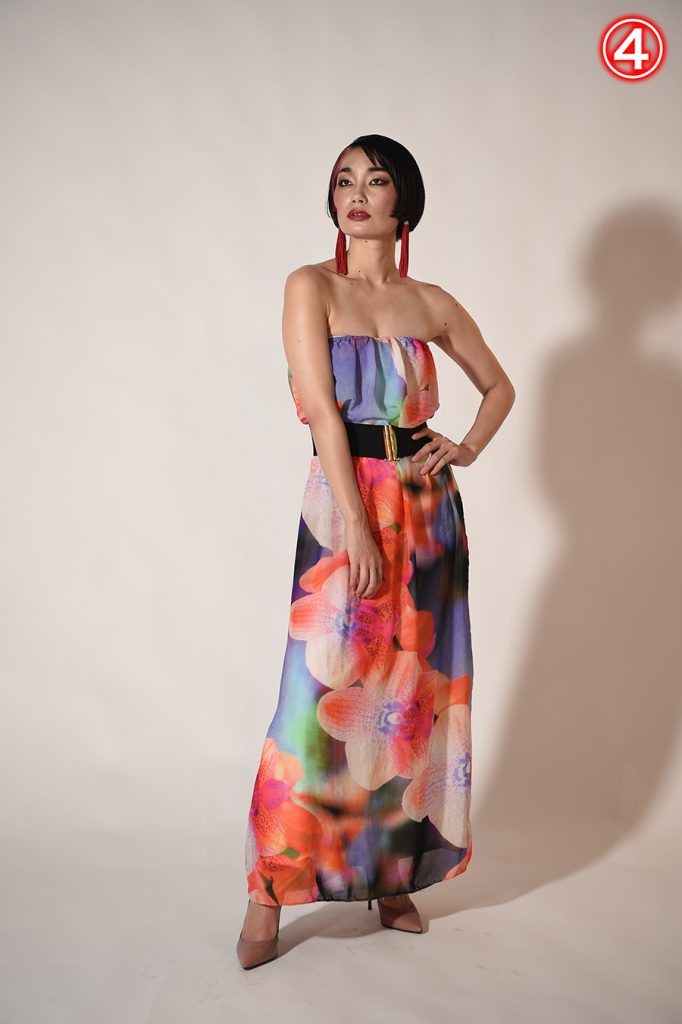
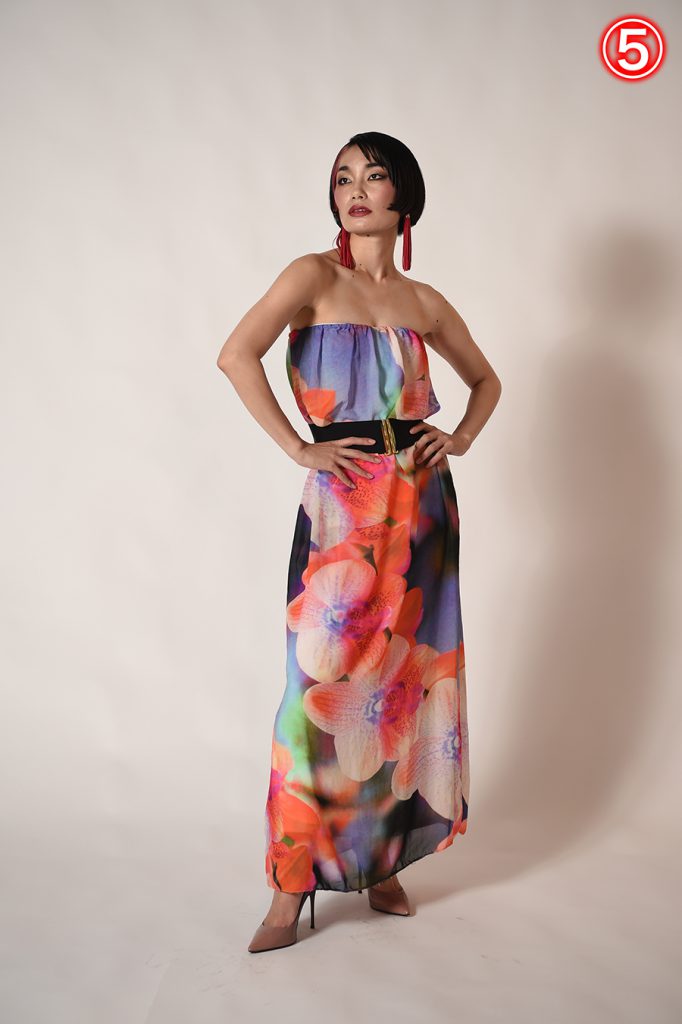 Shooting Data
Photos were taken so as not to be affected by the studio's ambient light (LED).
Sensitivity: ISO 400
Shutter speed: 1/125 sec.
White balance: Manual (Preset)
※The aperture value varies depending on the setting.
※Reference Material1. Photo without flash
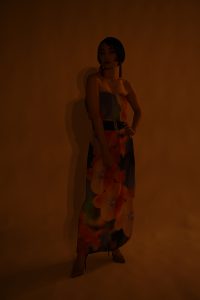 2. View of the accessory position from the model's perspective
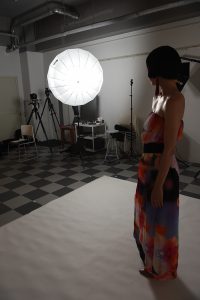 ※The model photos in this quiz were saved as JPGs in-camera and were not developed from Raw data.
Model: Kotomi Kai
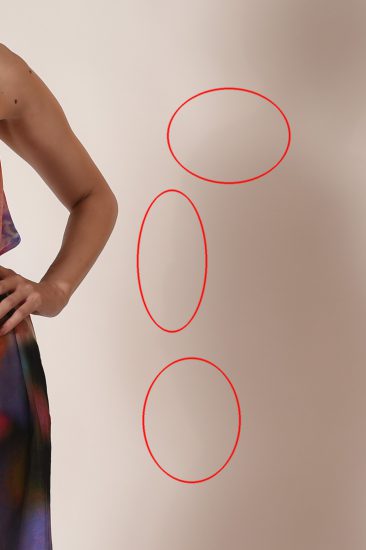
[Answer] C-①, D-⑤, E-③[Explanation] In ①, the center of the shadow is darker compared to ③ and ⑤, which indicates that the light source has a smaller emission area than those in ③ and ⑤. Therefore, the answer is "C," which has a smaller emission area than the D and E umbrellas. Additionally, the crisp edges of the shadows near the model also indicate a smaller emission area (below is an enlarged photo of ①).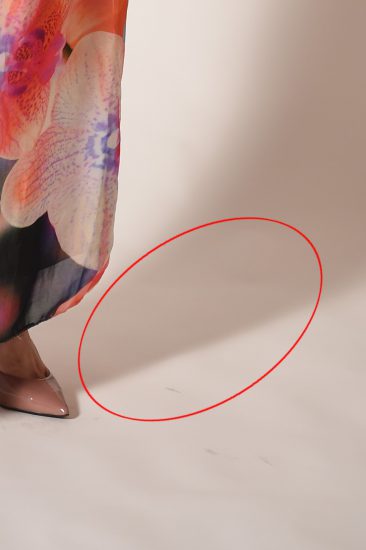 Enlarged photo of ①In ③ and ⑤, the size and density of the shadows are almost the same, but in ⑤, some shadow "doubling" (unevenness) can be seen. This is thought to be due to the difference in the angle of the reflective material, so ⑤ is the photo taken with the "D" white deep-type umbrella.The E translucent umbrella is light-transmitting, so it does not have the doubling (unevenness) seen in ⑤. Therefore, ③ is the photo taken with "E."Furthermore, the shadow doubling (unevenness) in ⑤ shows noticeable edges when enlarged (below is an enlarged photo of ⑤). To eliminate such shadows, one method is to cover the reflective surface of the umbrella with tracing paper or a translucent cloth, which is known as an "umbrella diffusion" technique.
 Enlarged photo of ⑤Organized by: Nissin Japan Ltd.
For inquiries, please use the contact form.
A No modifier (for comparison)B Flashbender XL (30cm wide x 33cm high, no front diffuser)C Softbox (60cm diameter)
D Umbrella (100cm deep type)
E Translucent umbrella (100cm)
Please choose from ①, ③, and ⑤.
*The flash was not fired in the setup photos.
[Answer Format] C-○, D-○, E-○ (Enter the number in the ○)Since this is a difficult question, here is a hint from the start.
Hint: Carefully observe how the size and structure of the accessory affect the appearance of the skin and clothing, as well as the way shadows are cast.
[The answer] is at the bottom of this page.【Settings】
【Photos】Click the image to enlarge. Shooting DataPhotos were taken so as not to be affected by the studio's ambient light (LED).
Sensitivity: ISO 400
Shutter speed: 1/125 sec.
White balance: Manual (Preset)
※The aperture value varies depending on the setting.
※Reference Material1. Photo without flash
2. View of the accessory position from the model's perspective※The model photos in this quiz were saved as JPGs in-camera and were not developed from Raw data.Model: Kotomi Kai
[Answer] C-①, D-⑤, E-③[Explanation] In ①, the center of the shadow is darker compared to ③ and ⑤, which indicates that the light source has a smaller emission area than those in ③ and ⑤. Therefore, the answer is "C," which has a smaller emission area than the D and E umbrellas. Additionally, the crisp edges of the shadows near the model also indicate a smaller emission area (below is an enlarged photo of ①).
Enlarged photo of ①In ③ and ⑤, the size and density of the shadows are almost the same, but in ⑤, some shadow "doubling" (unevenness) can be seen. This is thought to be due to the difference in the angle of the reflective material, so ⑤ is the photo taken with the "D" white deep-type umbrella.The E translucent umbrella is light-transmitting, so it does not have the doubling (unevenness) seen in ⑤. Therefore, ③ is the photo taken with "E."Furthermore, the shadow doubling (unevenness) in ⑤ shows noticeable edges when enlarged (below is an enlarged photo of ⑤). To eliminate such shadows, one method is to cover the reflective surface of the umbrella with tracing paper or a translucent cloth, which is known as an "umbrella diffusion" technique.Enlarged photo of ⑤Organized by: Nissin Japan Ltd.For inquiries, please use the contact form.