What is the true nature of the washi-like texture of the "white fabric reflector"?
シェアする
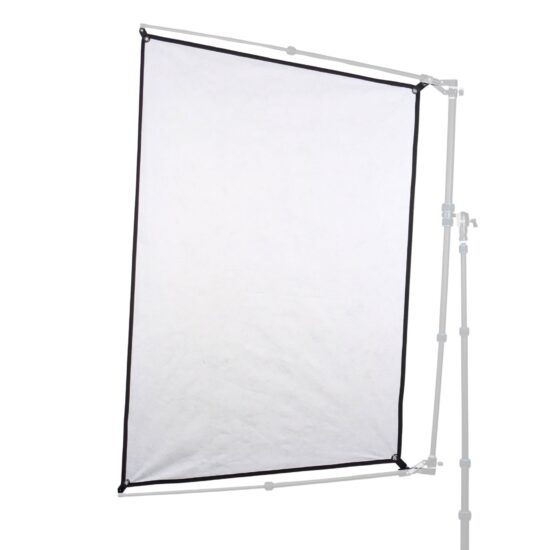
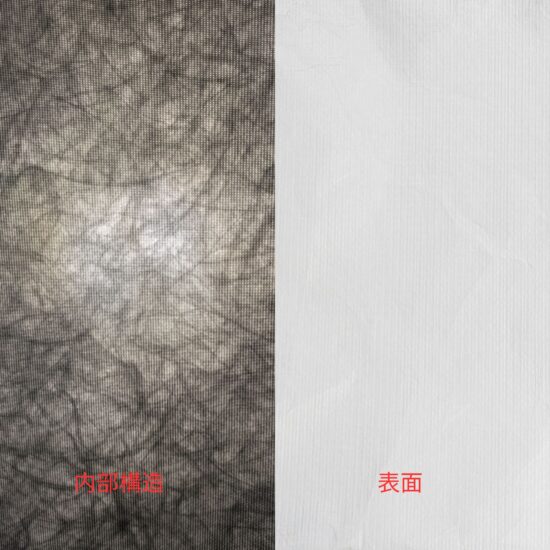
"There is a unique, Japanese-paper-like unevenness on the surface of the reflector I received..." We have recently been receiving inquiries like this from our customers. For those accustomed to standard white or silver reflectors, this unique "texture" of the white fabric might, at first glance, make it seem as though it wouldn't be effective. However, please rest assured. That "unevenness" is the very proof that the Bar Reflector White Fabric is able to "create high-quality, soft light while remaining thin and lightweight."Bar Reflector White Fabric
1. A "Multi-Directional Diffusion" structure where ultra-fine fibers manipulate light
The high-density polyethylene non-woven fabric used in the white fabric is formed by ultra-fine fibers—less than one-tenth the thickness of a human hair—overlapping in a random pattern. What we perceive as "unevenness" is actually the light reflecting in complex ways in every direction due to slight variations in fiber density. This "random structure" is key. Because it diffuses incoming light uniformly in all directions, it can deliver surprisingly soft and natural light that envelops the subject.
2. "Astonishing lightness" that changes conventional wisdom
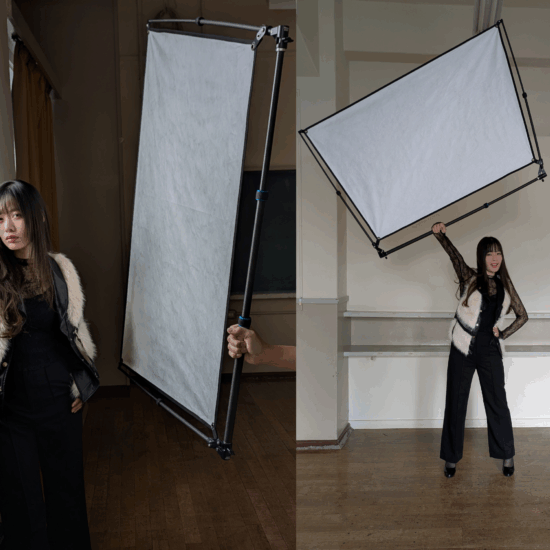
The true strength of the white fabric lies in its overwhelming lightness. It weighs approximately 43g/m². It is lighter than standard copy paper (approx. 64g/m²), so light that you can easily handle a large surface area with just one hand. This lightness is not just about convenience. It is easy to fix at any angle (omnidirectional) even when attached to a light stand, greatly expanding your creative range in photography. It also significantly reduces the burden of traveling to and moving around location sites, supporting more agile shooting.
3. Durability that is unfazed by bad weather or water
The material used has properties where the fibers themselves do not absorb moisture. Therefore, it is almost entirely unaffected by sudden rain or humidity.
Does not get heavy in the rain: Standard fabric reflectors become heavy when they absorb water and their reflectivity drops, but with the white fabric, you can maintain its original performance just by giving it a quick wipe.
Resistant to dirt: Even if it gets mud or water splashes on it during outdoor shoots, you can wipe it clean, allowing you to keep it a pristine white for a long time.
4. Faithful color reproduction: No optical brighteners used
Some standard white fabric products use "optical brighteners" to make them appear whiter. However, at shooting sites where precise color management is required, this can cause unexpected trouble. If optical brighteners are present, they react to light sources containing ultraviolet rays, causing the reflected light to glow slightly bluish-white (color cast). Since the Bar Reflector White Fabric does not use these, it faithfully reproduces the skin tone and texture of the subject without compromising the color temperature of the light source. Furthermore, because the whiteness is not derived from chemicals, there is little yellowing or tonal change due to aging, which is another strength of this material, allowing it to maintain stable reflective performance over a long period. (*Note: Due to manufacturing management, they may be used in the ink for lot numbers printed in small text.)
Summary
The surface, which at first glance looks uneven, is actually the "optimal structure" for diffusing light beautifully and delivering accurate colors. Even compared to standard reflectors (our company's products), it diffuses light with high reflectivity and transforms it into extremely soft light. Please be sure to experience the "quality of light" for yourself during your next shoot. Once you know this light, you will surely never want to go back to your old reflectors.